Former Athlete Brain Series: Five things I'd tell any athlete facing their final season
*This is building off of my previous blog post. So go back and give that a read for more context that led to these specific reflections.
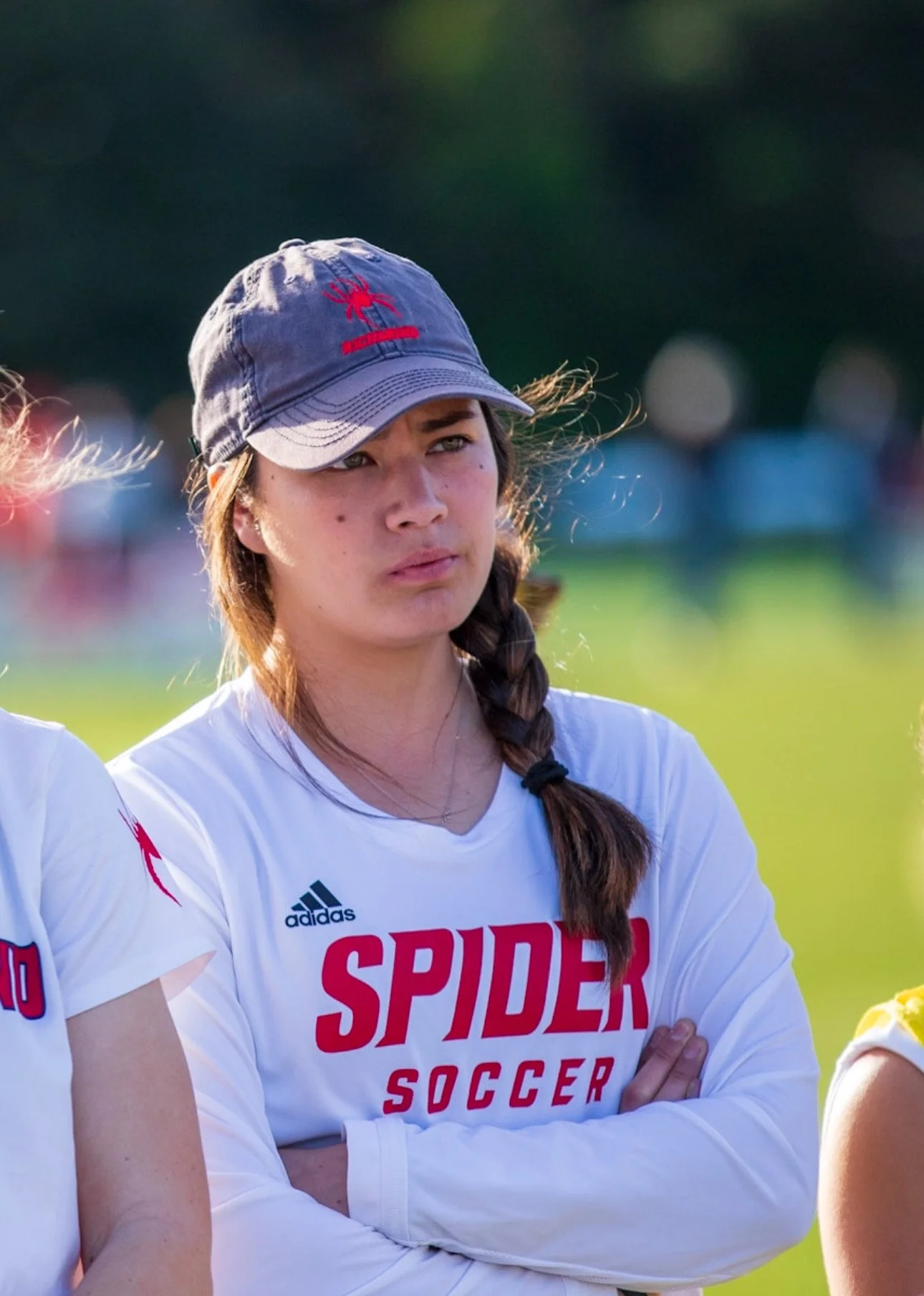
If you're a current college athlete, a former athlete, or someone watching an important chapter of life come to an end, here's what I wish I'd understood sooner:
1. It's okay to grieve a season, even if you're ready for what's next.
You don't have to pretend it wasn't important. You spent years of your life investing in something meaningful. Of course it's going to feel strange when it ends. And if your ending didn't look the way you expected, that can be especially difficult. Give yourself permission to acknowledge that. You can be grateful for what was and excited about what's coming. And if you're a person of faith, I think there's comfort in knowing that trusting God doesn't require pretending you're not disappointed. You can trust Him and still have questions. You can believe He is good and still wish things had turned out differently. Faith doesn't mean every ending feels easy.
2. Don't confuse your role with your identity.
This is probably the biggest thing I'd tell my younger self. Do not make being an athlete the entirety of who you are. It's a meaningful part of your story. But it's not the whole story. And here's where my faith has become especially important to me. As a Christian, I believe my identity is first and foremost found in Christ. Not in being a Division I athlete. Not in being a marathon runner. Not in being a coach, a business owner, or any other title I might hold throughout my life. Those things can be meaningful. They can be opportunities to serve others, grow, and use the abilities God has given me. But they're NOT the foundation. Because if my identity depends on my performance, what happens when I get injured? When I lose? When I'm no longer the best? When a season ends before I'm ready? Something that can be taken away was never going to be a secure place to build my entire sense of worth.
My abilities may change. My roles may change. My circumstances will definitely change. But who I am in Christ doesn't have to change with them. And that is a much more secure foundation than any athletic accomplishment could ever give me.
3. Build a life that has structure, but also meaning.
A packed calendar doesn't automatically equal a purposeful life. You can be incredibly productive and still feel directionless. Create routines. Set goals. Challenge yourself. But ask whether the things filling your days reflect what actually matters to you. Don't just recreate the busyness of college athletics because it's familiar. One of the questions I've learned to ask myself is whether I'm pursuing something because I genuinely believe it's worth pursuing, or because I feel uncomfortable when I'm not accomplishing something. There's a difference. I believe God has given each of us abilities, opportunities, and responsibilities to steward well. But good stewardship isn't necessarily doing more and more. Sometimes it's being faithful with what's right in front of you, even when it doesn't come with recognition or measurable results.
4. Find the right people.
One of the hardest things to lose after college athletics is the built-in community. So be intentional about rebuilding it. Find people who challenge you, encourage you, and care about more than your accomplishments. People who will celebrate your goals but also remind you who you are when things don't go according to plan. People who encourage you to grow in character, not just performance. For me, having people who share my faith and remind me of what matters beyond the next finish line has been incredibly valuable. You don't have to figure out every new chapter alone.
5. Be willing to become a beginner again.
This might be one of the most freeing things I've learned. You don't have to be immediately excellent at everything you try. You can learn a new sport. Pursue a different career. Pick up a hobby you're genuinely terrible at. Try something without knowing whether you'll ever be particularly good at it. Your value doesn't decrease because you're no longer operating at an elite level. And the willingness to start something new might lead you somewhere you never expected. I think there's a lot of freedom in accepting that you don't have to know exactly what the next ten years will look like. You can make plans, work diligently, and pursue opportunities while trusting that God sees a much bigger picture than you do.
The scoreboard disappeared. The potential didn't.
If I could go back and talk to myself after that final college soccer season, I think I'd tell her a few things. First, it's okay to be sad. It's okay to miss the team, the schedule, the competition, and the version of life you spent years building. It's okay to wish your last game had looked different. But I'd also tell her to be excited. Because there is so much more ahead than she can see right now. She'll find new challenges. She'll discover new passions. She'll learn that the competitiveness and discipline she developed through soccer can be used in ways that have nothing to do with scoring goals. And she'll realize that the best things sport gave her were never limited to what happened on the field. The grit, the relationships, the ability to show up when things are difficult, the willingness to get back up after setbacks. Those things don't disappear when your athletic career ends. But there's something even more important I'd want her to understand. You were never just a soccer player. And you were never meant to find your identity in something that could be taken away.
One of the verses that guides me is Colossians 3:2: "Set your minds on things above, not on earthly things." (NIV)
It's a simple verse, but it challenges the way I naturally tend to think. Because I love goals. I love improvement. I love competing. I love having something difficult to work toward. And none of those things are inherently bad, but they can become consuming when I allow them to determine how I see myself. If my worth rises and falls with my performance, I'll always be chasing something that can't fully satisfy me. There will always be another race. Another PR. Another accomplishment. Another version of myself I think I need to become. And eventually, another season that comes to an end. That's why I want my identity grounded in something that doesn't change when everything else does.
My identity is in Christ before it is in anything I accomplish.
I don't have to earn that identity by winning, I don't lose it when I fail, and I don't have to prove that I'm worthy of love by constantly becoming more successful. That doesn't mean I stop pursuing excellence. Actually, I think it gives me a better reason to pursue it. I can work hard because I'm grateful for the opportunities and abilities God has given me. I can compete because I genuinely love it. I can set big goals because I want to see what I'm capable of and use those abilities well. But I don't need any of those things to tell me who I am. And when a season ends, even one I wasn't ready to let go of, I can trust that God hasn't somehow lost sight of my life just because my plans changed. I may not know exactly what comes next. But I don't have to know everything to trust the One who does. I still love competing, setting big goals, and finding out what I'm capable of. I hope I never lose that. But I also hope I keep learning how to hold those things with open hands.
To pursue excellence without making achievement my identity.
To appreciate each season without expecting it to last forever.
To work hard, remain grateful, and trust God with what I can't control.
Nobody tells you what happens after your last game. But maybe the end of one chapter is an opportunity to learn that your identity was never supposed to depend on that chapter in the first place. And the person you became through all those years of training? She's coming with you. Not because she still has something to prove, but because there's still so much good ahead.
If you're a current or former athlete who's experienced this transition, I'd love to hear your story. What did you miss most? And what helped you find your footing afterward?
And if you're a runner looking for a coach who cares about the person behind the performance, I'd love to connect. I believe running can be an incredible tool for growth, but it should never be the only thing that defines us.
