From fueling disasters and treadmill miles all the way to my PR at Boston…
I've run six marathons. Which means I've voluntarily paid money to run 26.2 miles six separate times. And somehow, I keep signing up for more.
You'd think after the first couple, I'd have the whole thing figured out. Perfect pacing... Flawless fueling... A well-executed race plan. The kind of composure that makes marathon running look effortless. Not quite there yet (are we ever??). All I can say is that I'm 10000% better with all those things compared to 2 years ago, but it's far from perfect. I'm excited for when the "6 lessons" turns into "10" or "15" in the future.
Every marathon teaches me something different. Sometimes through a joyful breakthrough. Sometimes through a humbling experience. And sometimes through the slow realization that the advice I've been giving myself for months was, in fact, correct.
Here it is: Six marathons... Six lessons. Let's go.
#1. Abebe Bikila Day International Peace Marathon | D.C. | September 2024 (3:43)
Lesson: You Actually Have to Eat and Drink DURING a Marathon.
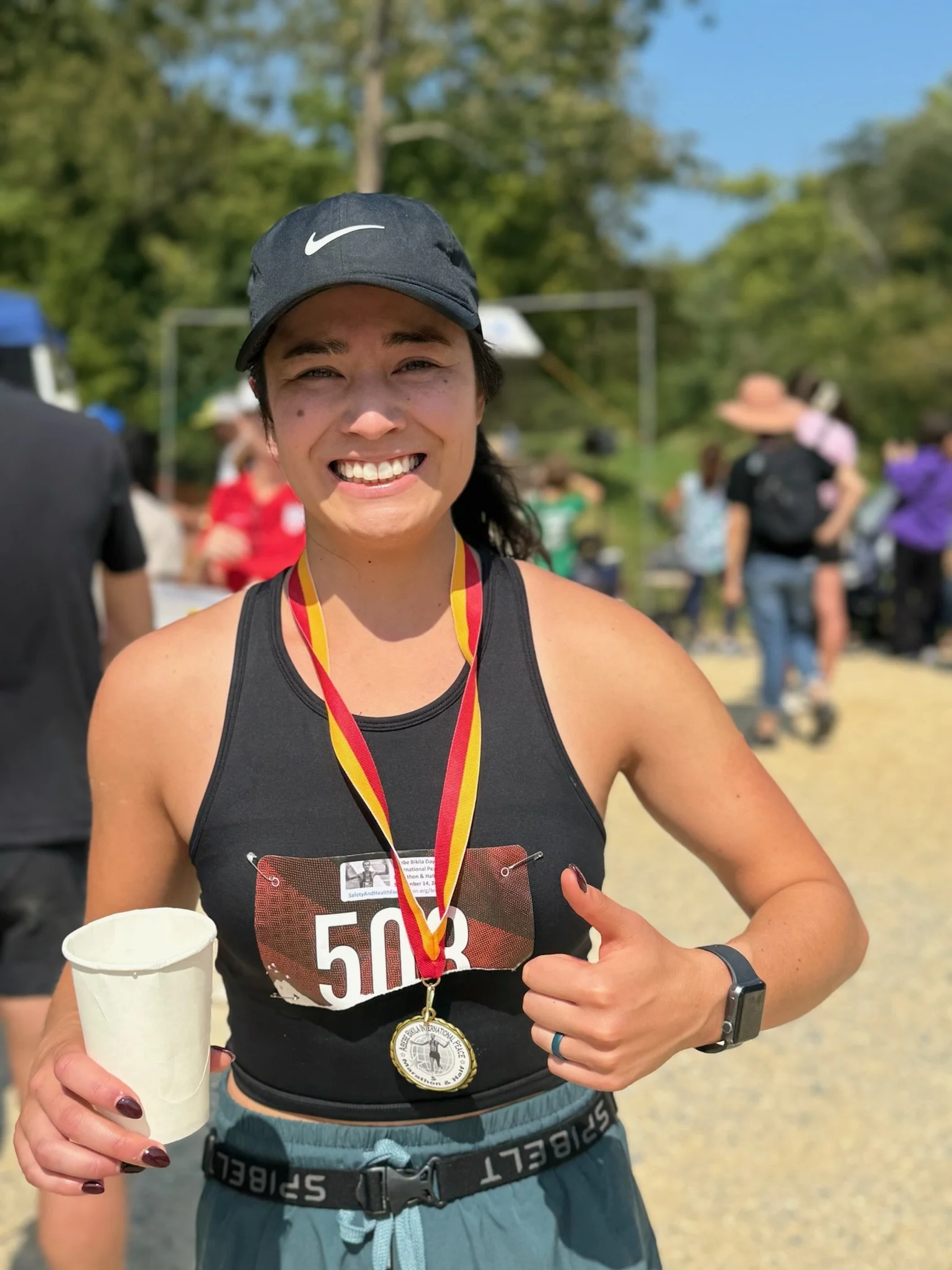
Let's start with my first marathon. I had “trained” (as in ran several times per week...zero structure). But I believed that I could run 20 miles. I was in good shape. So naturally, I figured I'd just... run the marathon. SIMPLE.
Fueling? Hydration? Those seemed like minor logistical details. Just eat and hydrate well before the race. Right?
Turns out, those things are actually fairly important while you're asking your body to run for several hours. Who knew? Well, sports scientists, coaches, experienced marathoners. Literally anyone who had Googled "how to run a marathon."
But apparently, I needed to conduct my own experiment.
Here's the thing about marathon fueling: your fitness and your available energy are two different things. You can have a fantastic aerobic engine and still run out of fuel. You can take a 2,000 horsepower supercar for a road trip and go fast, but it still needs fuel to actually go! It won't go so fast if it runs out of fuel halfway through the drive.
Your body stores carbohydrates as glycogen in your muscles and liver. Those stores are limited, and during prolonged running, particularly at marathon intensity, carbohydrate becomes an important fuel source. As glycogen availability decreases, maintaining your pace can become increasingly difficult. That's part of the physiology behind the infamous marathon "wall." And while your body can use fat for energy, that doesn't mean you can simply ignore carbohydrates and expect to maintain the same intensity.
What I'd tell a runner now:
For most runners racing a marathon, a practical carbohydrate target is approximately 30–60 grams per hour, with some athletes benefiting from up to 90 grams per hour when their gut has been trained to tolerate it.
That could mean gels, sports drinks, chews, or other easily digested carbohydrate sources. For example, I would take 2 gels (20g carbs each) per hour during a race. I'd wash it down with a gatorade-type carb mix drink along the way. Races often offer cups of gatorade at aid stations. You can also carry a water bottle with you with your own fuel.
And hydration matters too. Sweat losses vary considerably depending on temperature, humidity, body size, intensity, and individual sweat rate. The goal is to replace an appropriate amount of fluid without drinking so much that you risk overhydration.
Most importantly, practice your fueling during training. Your stomach actually needs training just like your legs do. A race is not the place to find out that your digestive system strongly disagrees with the gel you bought at the expo yesterday!
The lesson: You cannot out-fitness a completely neglected fueling strategy. And no, eating a big dinner the night before does not mean you're set for the next four hours.
#2. Richmond Marathon | Richmond, VA | November 2024 (3:23)
Lesson: Hills Build More Than Strong Legs.
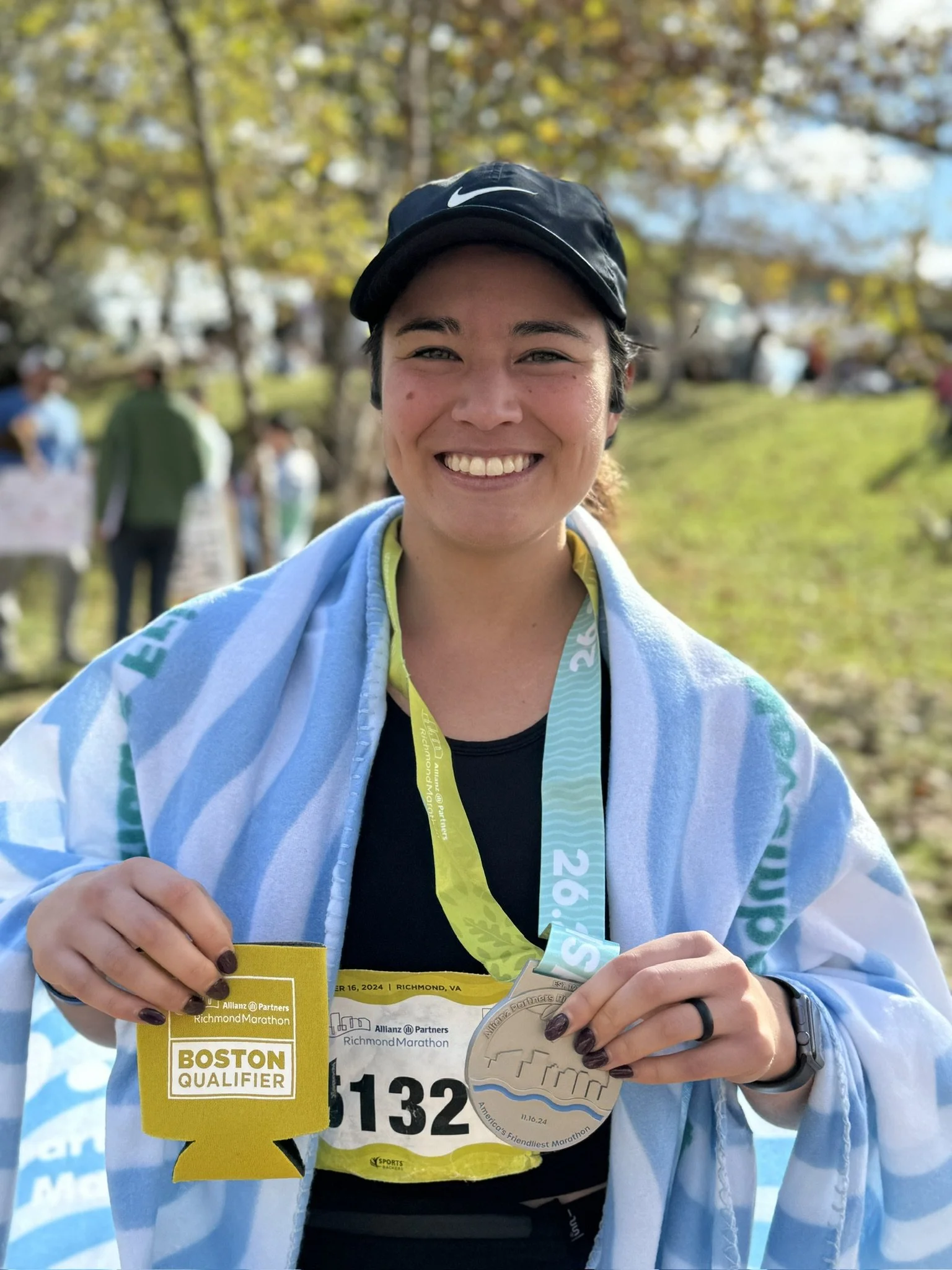
BQ with a 3:23 time
By marathon number two, I'd learned that food and water were, in fact, necessary for human survival. Progress!
Two months later - Richmond taught me something different: hill training can make you a stronger runner even when you're preparing for a relatively flat race.
If you live in the Blaksburg / NRV area, you know the Huckleberry Trail (I call it Huckleberry Hills). And everyone dreads the infamous Chicken Hill off Beamer Way - soul crushing, and it never ever gets easier. This was my main training ground leading up to Richmond. While the race course did have some rolling hills, it was still relatively flat. I did feel like hills had become a strange friend to me though, and I believe that helped me have a stronger race.
There's a reason hill workouts have earned their place in endurance training. Running uphill increases the muscular demands of running. Your glutes, calves, and other lower-body muscles have to produce more force to move you against gravity. At the same time, your cardiovascular system is working harder to meet the increased demand. Essentially, hills give you an opportunity to develop strength and aerobic fitness in a very running-specific way.
But there's an important distinction. Hill training isn't magic, and it isn't automatically better than flat running. It works because it provides a useful training stimulus when programmed appropriately.
Three ways to use hills:
Short hill sprints: Think 8–12 seconds of powerful uphill running with full recovery. These can help develop neuromuscular coordination and force production without requiring a long, exhausting workout.
Longer hill repeats: Think 45 seconds to 3 minutes uphill at a controlled hard effort. These can develop aerobic power and muscular endurance, depending on intensity and recovery.
Rolling long runs: These build familiarity with changing terrain and teach you to manage effort when the road refuses to cooperate.
One caution: downhill running deserves respect too. It creates substantial eccentric loading, particularly through the quadriceps, and can leave you sore if you increase it too quickly.
The lesson: Don't just train to run faster. Train to become a stronger, more durable runner.
Sometimes the best thing you can do for your flat-road pace is spend a little time going uphill!
#3. Shamrock Marathon | VA Beach | March 2025 (3:16)
Lesson: The Treadmill Is Your Friend. And You Can Stop Being Dramatic About It.
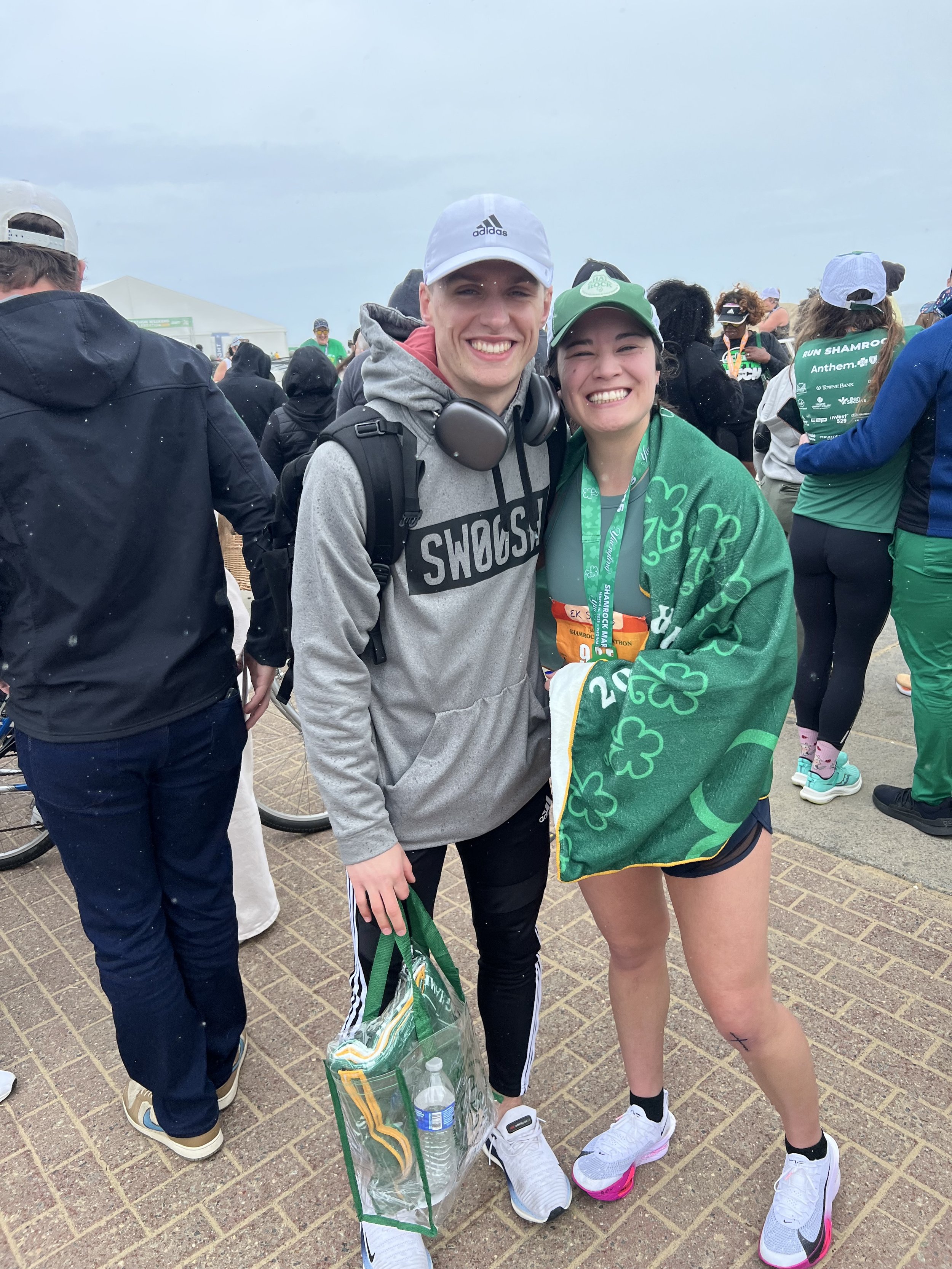
Me and my biggest supporter!!
I know. The treadmill. The machine that somehow makes 30 minutes feel like an entire afternoon. The place where you can run eight miles while staring at the exact same wall and questioning every decision that brought you there. But here's my potentially unpopular opinion:
The treadmill is one of the most underrated tools in distance running.
And Shamrock 2025 helped solidify that for me. We love to romanticize outdoor running. The sunrise. The trails. The fresh air. The feeling of freedom. And I LOVE those things too. But sometimes it's freezing. Or pouring rain. Or dark. Or your schedule is packed. Or you need to execute a specific workout without constantly checking your watch. That's where the treadmill earns its keep. These things are especially the case for a Spring Marathon training block, where the bulk of training is January/February.
Why treadmill training works:
First, it removes a lot of variables. You can control speed, incline, and duration with precision. For workouts where you're trying to maintain a consistent effort, that can be incredibly useful.
Second, it makes consistency easier. And consistency, not the aesthetic appeal of your training environment, is what produces long-term adaptation.
Third, treadmill running is still running. The biomechanics aren't perfectly identical to overground running, but research generally finds many important similarities when speeds are comparable.
You don't suddenly lose all your fitness because your scenery is a television screen.
A few treadmill tips
Use a fan if possible. Indoor heat buildup can make the same pace feel significantly harder.
Don't obsess over setting the incline to exactly 1%. It's not a universal requirement.
Use effort alongside pace, since treadmill calibration and outdoor conditions can differ.
Use it as personal entertainment or education time. I think 80% of my podcast listening/watching time has occurred while on a treadmill.
And if you're doing a long run indoors, break it into smaller mental chunks. Sometimes running 16 miles sounds terrible, but running four sets of four miles while changing your playlist, incline, or focus feels much more manageable. It's still 16 miles. Your brain just appreciates being lied to a little.
The lesson: The best training environment is often the one that allows you to execute your training consistently. You don't get bonus fitness points for suffering through terrible weather just to prove you're tough.
#4. Richmond Marathon | Richmond, VA | November 2025 (3:26)
Lesson: Start Slower Than You Think!!!!
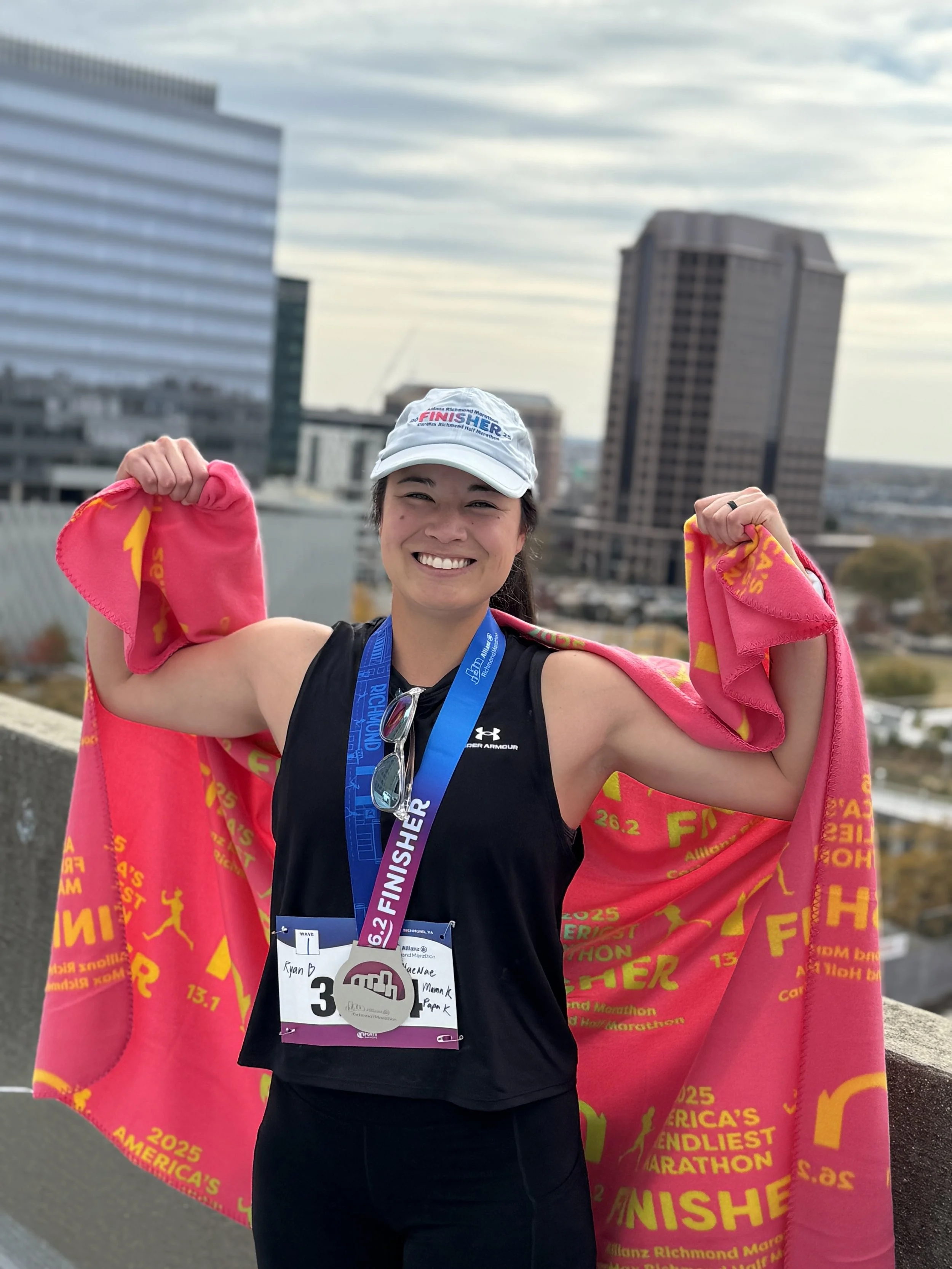
I love the Richmond Marathon course
If marathon running has taught me anything, it's that the first few miles are exceptionally good at convincing you that you're fitter than you actually are.
The crowd is cheering. Your legs feel fresh. You've tapered. You've got your race shoes on.
Suddenly, a pace that normally requires focus feels like a casual Tuesday morning jog. DANGEROUS if not DISCIPLINED.
Richmond 2025 reinforced one of the most important marathon pacing principles: Just because a pace feels easy at mile three doesn't mean it's sustainable through mile twenty-three.
The marathon is a very long exercise in energy management. When you start too aggressively, you increase your early carbohydrate expenditure and physiological strain. Depending on conditions, you may also accelerate heat accumulation and muscular fatigue. You might not feel the consequences immediately. That's what makes it so tempting. But the marathon has a remarkable ability to send you the bill somewhere around mile 20.
My advice for pacing a marathon:
Miles 1-3: Be patient.
Start controlled. For many runners, slightly slower than goal pace is appropriate, especially when the start is crowded or the course begins downhill.
Miles 4-18: Settle in.
Find a sustainable rhythm. Focus on fueling, hydration, and staying relaxed. Make decisions based on effort, not just what your GPS says.
Miles 19-23: Stay engaged.
This is where fatigue starts asking some difficult questions. Keep your attention on form, fueling, and the next manageable segment.
Miles 24-26.2: Race what's left.
If you've paced and fueled well, this is where you can start using whatever you've saved. Of course, courses, weather, and individual strengths affect the ideal pacing strategy. Not every marathon should be run with perfectly even splits. But for most recreational runners, aggressively banking time early is a gamble that rarely pays off.
The lesson: The marathon doesn't reward the runner who feels the fastest at mile five. It rewards the runner who can sustain the best effort across all 26.2 miles. Be boring early. You'll have plenty of opportunities to be dramatic later.
#5. Shamrock Marathon | VA Beach | March 2026 (3:26)
Lesson: You Can Be Proud and Disappointed at the Same Time.
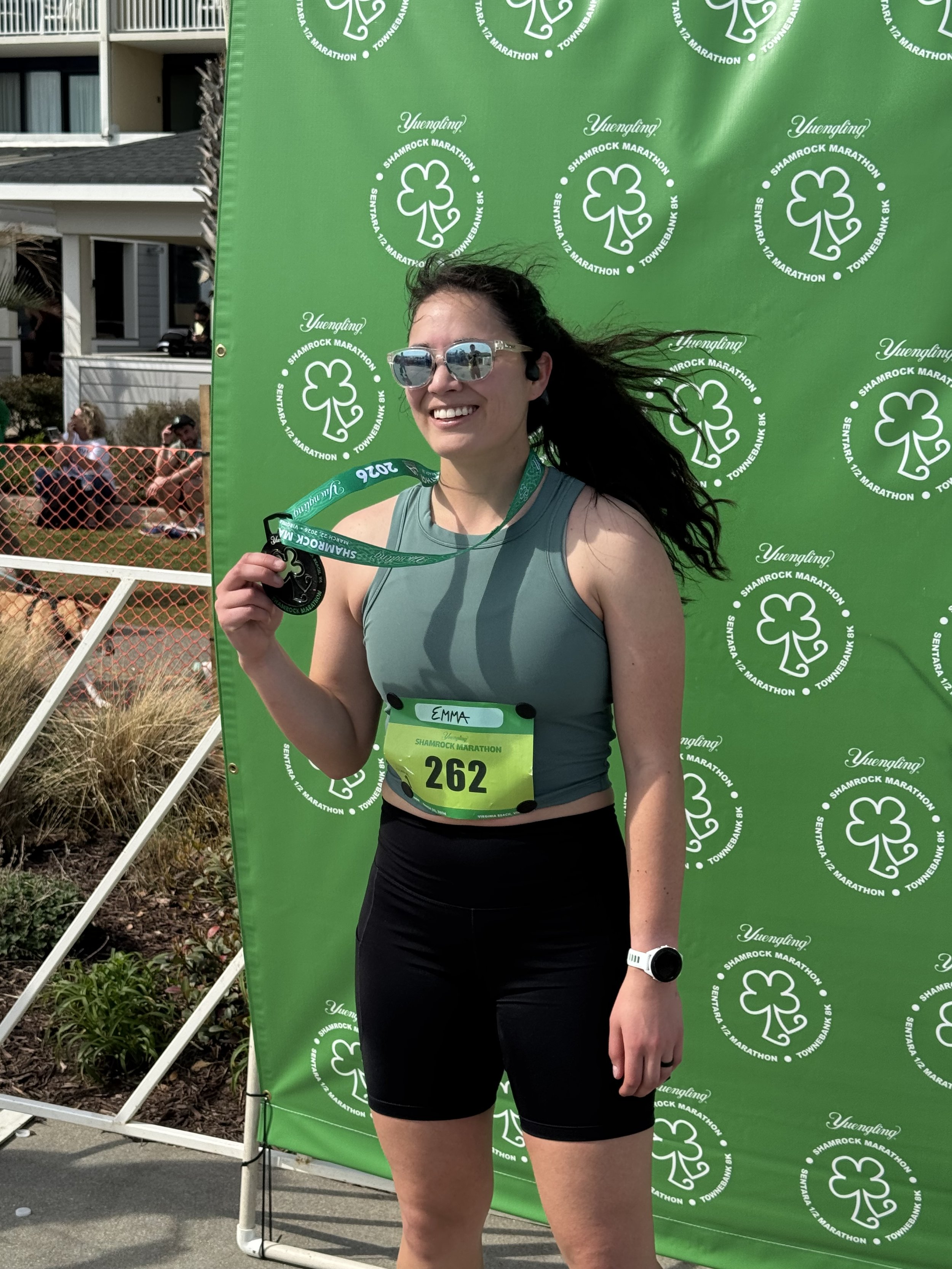
This was a rough one, but I was proud.
This one isn't really about training science. It's about something I think a lot of competitive people struggle to admit.
I had prepared for this race very well - trained extremely hard and more dialed in than I had before. I was intentionally aiming for a BQ time. While I had already gotten the BQ for 2026, I wanted to make sure I had another recent race time for 2027.
I was expecting to PR this race. But I didn't. I ran almost 10 minutes slower than my PR. Honestly, still a very respectable marathon time! BUT I couldn't not admit that I was disappointed at the end of the race.
However, when reflecting, I genuinely felt like it was the hardest race I had ever done. That year, the weather was HOT and HUMID. I lost way more fluids than expected. I “died” early in the race due to that, but I never stopped. I was genuinely proud of my grit and determination to finish that race even though it hurt the way it did.
You can accomplish something objectively impressive and still feel disappointed. You can be grateful for the opportunity and frustrated with your performance. You can recognize how much work you've put in and still wish the result had been different.
Those feelings aren't mutually exclusive. And I think runners sometimes put unnecessary pressure on themselves to choose one.
If we express disappointment, we're afraid we'll sound ungrateful. If we celebrate, we worry we're settling. But I think there's a middle ground.
You can honor the work without pretending you're satisfied with every outcome.
Here's what I've learned about processing a race: I like separating the experience into three categories:
1. The outcome
What was the result? Did I hit my time goal? Did I PR? Did I finish the way I wanted?
2. The execution
How well did I race? Did I follow my plan? Fuel appropriately? Manage effort? Respond well when things got difficult?
3. The process
What did the training block require of me? What did I learn? Where did I improve? What habits did I build?
Those three things don't always tell the same story. You can have a great training block and a disappointing race. You can execute beautifully and still miss a time goal because of weather or other factors outside your control. You can even PR while making some pretty questionable race-day decisions. Ask me how I know.
And you can be disappointed in your result while still being genuinely proud of the athlete you're becoming.
A better post-race question:
Instead of asking only, "Did I hit my goal?"
Try asking:
"What did this race reveal about my preparation, my execution, and what I need next?"
That question gives you something useful to work with. It turns disappointment into information without dismissing the emotions attached to it. And sometimes, after doing the analysis, you need to put the watch away and let yourself be a person. You're allowed to care deeply about your performance. You're also allowed to enjoy your life when it doesn't go exactly as planned.
The lesson: Pride and disappointment can coexist. One doesn't invalidate the other. You can celebrate how far you've come while still being hungry for what's next.
#6. Boston Marathon | Boston, MA | April 2026 (3:11)
Lesson: Sometimes Your Fastest Runs Happen When You Stop Chasing a Time.
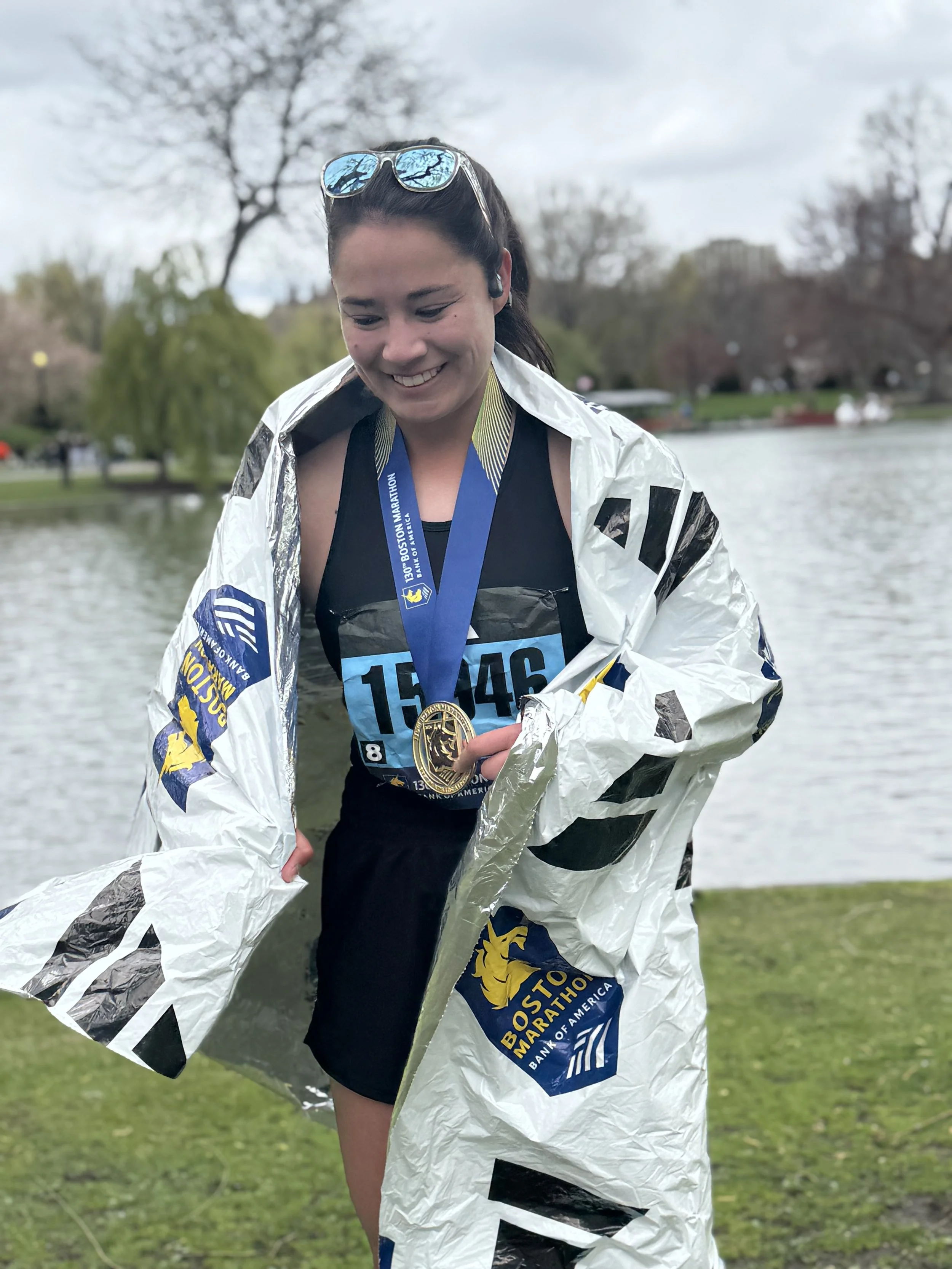
Was NOT expecting to PR this race, but I did!
And then came Boston. One of the most iconic races in the world. A race I'd worked hard to qualify for. And, as it turned out, a race that would become my fastest marathon yet. But here's the funny part: I didn't go into Boston chasing a PR.
After the disappointment of Shamrock just a month earlier, I approached Boston differently. I wanted to experience it. All of it. The crowds, the atmosphere, the history, the privilege of standing on that starting line.
I wanted to run because I loved running.
And somewhere along those 26.2 miles, I was reminded of something surprisingly easy to forget when you become serious about a sport:
You're allowed to run simply because you love it. You don't always have to have a goal attached.
Not because your watch says you're productive. Not because you need to prove something. Not because every workout or race needs to contribute to some bigger performance objective. Just because running is something you genuinely enjoy.
There's a funny thing that can happen when you're constantly chasing improvement. You start treating every run like an evaluation. Was my pace good enough? Was my heart rate low enough? Was my training status productive? Am I fitter than last month? Did this run move me closer to my goal?
And those questions aren't inherently bad. Training with intention is important. I LOVE chasing big goals, and I don't see that changing anytime soon. But somewhere along the way, running can become another thing you feel obligated to perform well at. Boston reminded me that performance and enjoyment don't have to compete.
The race I'll remember for more than the finish time:
I remember feeling incredibly grateful throughout that race. Grateful for the training, the people who helped me get there, and the opportunity to run one of the most celebrated marathons in the world. I wasn't constantly doing mental math to figure out my projected finish time. I was genuinely soaking it all in. I felt like I was running for the joy set before me.
And apparently, part of that joy involved listening to Fix You by Coldplay on repeat for the entire first hour. Yes. One song. For an hour. I'm not entirely sure what that says about me psychologically, but it worked.
Then, during the second half of the race, Ryan called me. He even looped in several family members so they could cheer me on while I was running. There I was, in the middle of the Boston Marathon, hearing the voices of people I love encouraging me from miles away. It was one of the most special moments I've experienced in a race. And I really do think it gave me another boost of energy when I needed it. I also couldn't help thinking about the people who had helped get me there, especially my husband, Ryan, and sister, Jinae, two of my biggest catalysts throughout the process.
It reminded me that even though running is often considered an individual sport, you rarely accomplish something meaningful entirely on your own.
The encouragement, sacrifices, conversations, and support of other people become part of your story too. And somewhere in the middle of all that gratitude, I ran my fastest marathon. Not because I stopped caring about running well. But because, for once, I wasn't allowing a finishing time to determine whether the experience was worthwhile.
I was simply grateful to be there, doing something I loved, surrounded by reminders of how much there was to be thankful for. And that was enough.
The surprising power of enjoying what you do:
Sometimes, removing the pressure of a specific finishing time allows you to settle into a better rhythm, respond naturally to how you're feeling, and actually experience the race instead of constantly calculating whether you're ahead or behind schedule. That doesn't mean abandoning smart pacing or ignoring your limits. And it certainly doesn't mean that running without a time goal automatically makes you faster. But there's something worth understanding about the relationship between motivation and performance.
In psychology, there's a concept called intrinsic motivation. It's the desire to do something because the activity itself is rewarding, rather than solely because of an external outcome. Research in exercise psychology has found that more self-determined forms of motivation, particularly intrinsic motivation, are associated with stronger long-term exercise participation.
In simpler terms: When you genuinely enjoy what you're doing, you're more likely to keep showing up for it.
And in endurance sports, showing up consistently over months and years matters a whole lot more than one perfect workout.
Content but always ambitious.
I think that's the biggest thing Boston taught me. You don't have to choose between being content with where you are and being ambitious about where you want to go. You can have big goals without making your identity dependent on achieving them. You can train hard, race competitively, and pursue excellence without operating from a constant fear of not being good enough.
For me, my faith plays a huge role in that distinction. I want to run and strive from a place of joy and security, not fear or pride. There's a difference between pursuing something because you love it and pursuing something because you need it to validate you. And I think that's worth remembering, whether you're running a marathon, building a business, or working toward any other meaningful goal.
What I'd encourage every runner to do:
Keep chasing big goals. Sign up for the race that scares you. Train intentionally. Work toward that PR.
But make room for runs that aren't about proving anything. Run somewhere beautiful. Run with friends. Leave the pace screen alone sometimes. Appreciate the fact that your body allows you to do this. Because if every run becomes a performance review, eventually you risk losing the very thing that made you fall in love with running in the first place.
The lesson: Don't become so focused on getting better at running that you forget to actually enjoy being a runner.
And remember that sometimes, the most meaningful finish lines aren't the ones where you finally achieve a certain time. They're the ones where you realize that the time was never the most important part. Even when you happen to run a PR.
Content. But always ambitious.
Six Marathons Later...
If you'd told me before my first marathon that I'd eventually become a running coach, spend hours studying exercise physiology, and voluntarily sign up for even more endurance events, I probably would've believed you. I've always been a little too enthusiastic about doing difficult things. But what I didn't expect was how much running would teach me outside of running.
DC taught me that preparation means more than being fit.
Richmond taught me to build strength, not just speed.
Shamrock taught me that consistency matters more than having perfect conditions.
Richmond taught me patience.
Shamrock taught me to hold two emotions at once.
And Boston reminded me why I started doing this in the first place.
The funny thing is, I'm still learning - I still get pacing wrong sometimes, I still have workouts that humble me, I still occasionally look at my watch and let a number determine how I feel about an otherwise perfectly good run. But that's part of why I love this sport. There's always something to learn, something to improve, and another opportunity to show up a little wiser than you did last time.
And maybe that's the real lesson from six marathons:
You don't have to have everything figured out to keep getting better... You just have to be willing to learn. Preferably without repeating the same fueling disaster six times.
Here's to more miles, smarter racing, and remembering to enjoy the whole thing.
